
Finding Residents Across Lombard Records
Begin with the kind of fact already in hand. A Lombard street address works well in the DuPage County property search because the assessor can return a parcel identification number, situs address, billing name, tax districts, and transfer details. A surname is better suited to the Recorder's grantor and grantee index or the Circuit Clerk's party search. For an older household, use the 1924-25 county directory, newspapers, census releases, cemetery material, and obituary notices. No one source is a complete Lombard residents directory.
Official records document an act, status, or filing. A deed can name an owner without proving who slept at the address. A voter match confirms registration information under a restricted process, not every person in a home. Directory entries are dated snapshots. Keep the source date beside each note and seek two independent points, such as the same name tied to the same street and parcel.
- Normalize the name or address, including direction and street suffix.
- Check the DuPage parcel card by address, PIN, or billing name.
- Use the Recorder index to identify deeds, liens, or plats.
- Compare an older name with directory, newspaper, census, and cemetery sources.
- Ask the correct custodian for records that are not placed online.
Lombard Residents Directory Offices
Most Lombard resident records are held by DuPage County in Wheaton, not at a city records counter. The Recorder indexes deeds and other recorded instruments. The Supervisor of Assessments maintains parcel and billing records, while the Election Division operates an address-oriented voter match. The Circuit Clerk handles court and probate files. Village staff keep municipal permits, police records, board material, and code files. Pick the custodian by record type before making a trip or request.
DuPage County Recorder of Deeds
421 N. County Farm Road
Wheaton, IL 60187
630-407-5400
DuPage Supervisor of Assessments
421 N. County Farm Road
Wheaton, IL 60187
630-407-5858
Start With Lombard Parcel Cards
The DuPage Property Records Search accepts a PIN, address, billing name, or map selection. That range makes the parcel card the best first record when the question begins with a Lombard home. Its tabs and fields separate the property location from the mailing destination. They can also show township, school, library, park, fire, and other taxing bodies attached to the parcel.
A billing name is an ownership or tax-mail clue, not proof of residence. Preserve both the property and billing values when they differ. Then copy the PIN exactly. It is the stable bridge to the county GIS, tax history, Recorder search, plats, and a deed chain.
The official DuPage property search shows the layout used for Lombard parcels.
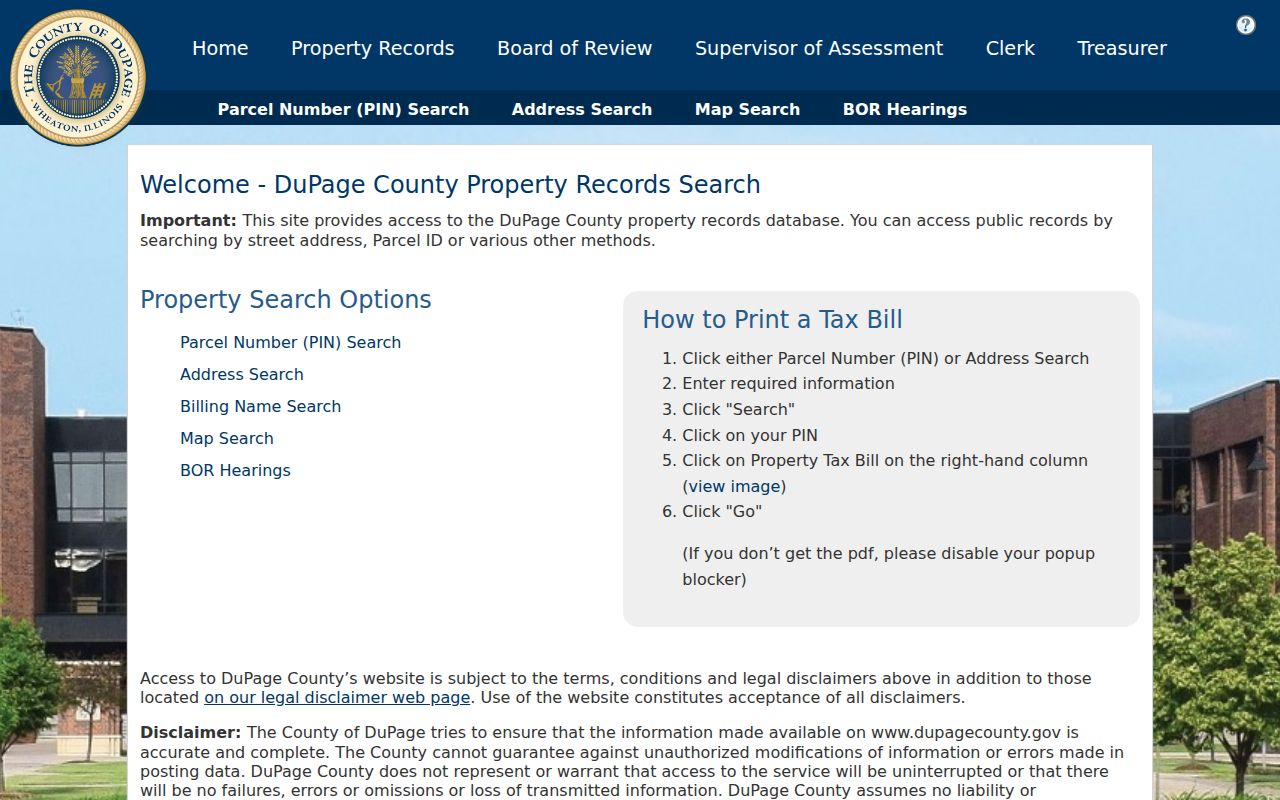
The screen is a starting point for a verified parcel trail, not a complete list of people at an address.
Lombard Deeds Span Two Eras
DuPage County property research reaches back to the county's organization in 1839, yet online access has later cutoffs. The computer and name index begins in 1961. PIN searches start in 1985, and street-address searches start in 1995. Plats can reach into the 1800s. That gap is an access difference, not proof that an older record vanished.
Use the current PIN or street to find a recent instrument, note its grantor, grantee, document number, date, and legal description, then work backward one transfer at a time. Book and page references have their own numeric register. When the online index stops, the Recorder Research Department can help with office records at 630-407-5401. Certified copies also come through that department.
Current Lombard Directory Sources
A present-day Lombard residents directory is best understood as a set of focused indexes. Each contains only the people connected to its official purpose. Use the table to choose a record, then read its limits before drawing a conclusion.
| Source | Who It Lists | Keeper | Access |
|---|---|---|---|
| Property record | Owners and billing names | Supervisor of Assessments | Free portal |
| Voter match | A matching registered voter | Election Division | Restricted address match |
| Recorded documents | Parties to deeds, liens, and plats | Recorder of Deeds | Free index; copies separate |
| Case index | Public parties and docket entries | Circuit Clerk | Online search and terminals |
| Boards and commissions | Officials and civic participants | Village of Lombard | Public pages and minutes |
Ownership questions belong with the assessor and Recorder. A court name requires a case number, status, and docket check. Village board lists identify public civic roles only. For a name that must be tested across two or more sources, follow the Lombard resident lookup workflow and keep each result's date and purpose attached.
Lombard Voter Search Uses Addresses
The DuPage voter lookup is not a browseable name roll. Its public form begins with house number, street, city, and a district or information selection. Last name, date of birth, the last four digits of a Social Security number, or a driver's-license number can serve as identity filters. Those private inputs should not be copied into notes or shared.
Address form matters. The official help includes a spaced surname example such as Mc Carthy, and DuPage grid-style addresses can look like 1N234. Try the county's field grammar before treating a failed match as evidence. Illinois Election Code limits disclosure and use of voter-file data, so the full file is not an open Lombard resident roll.
The DuPage voter lookup displays the address-led match route.
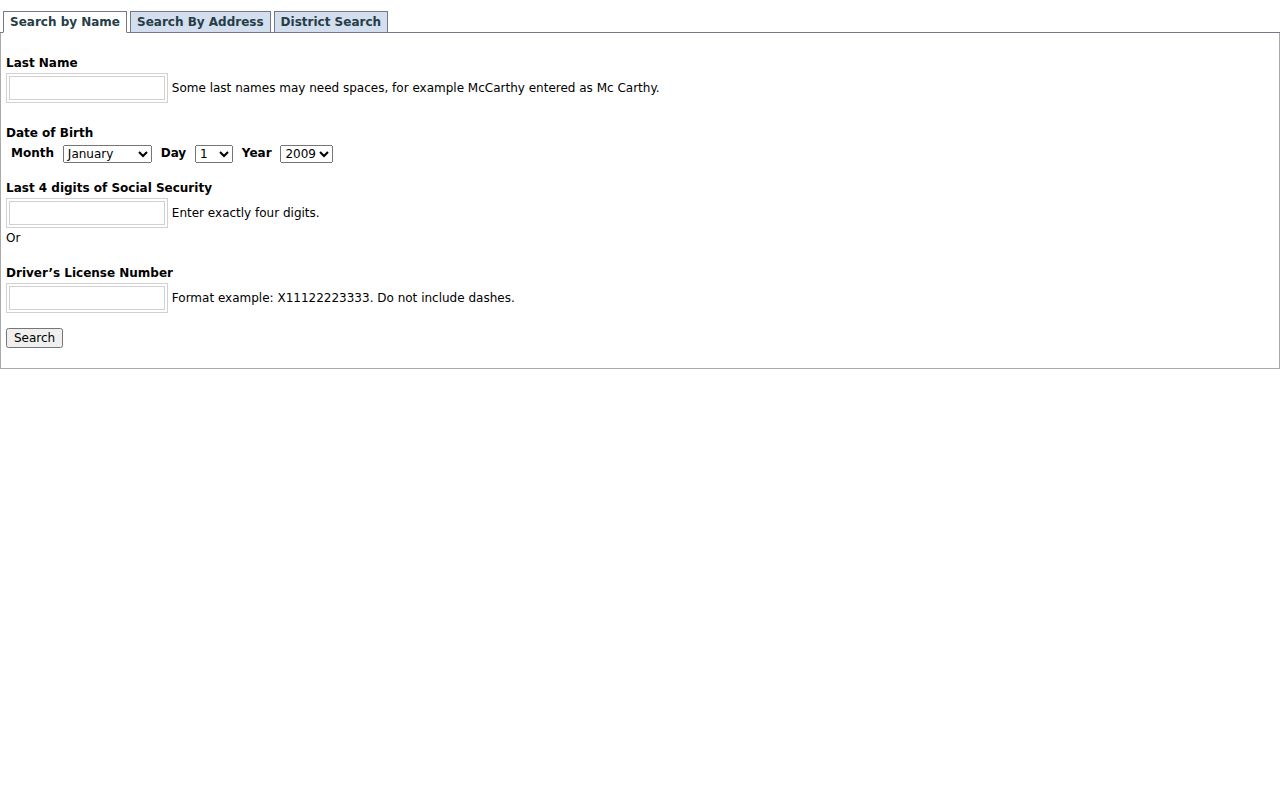
The form verifies a match for an authorized personal inquiry; it does not reveal every voter on a block.
Lombard Court Names Need Context
The Eighteenth Judicial Circuit serves Lombard. Its Circuit Clerk search can return a case number, party, case type, status, next court date, courtroom, judge, balance, and docket entries when those fields are public. A same-name result is only a lead. Confirm it with the case number, filing date, and another non-sensitive fact.
A CAPTCHA or security screen may interrupt the online route. Public courthouse information terminals remain available at 505 N. County Farm Road in Wheaton, and the clerk offers file-copy and certification channels. Sealed, impounded, juvenile, and otherwise restricted material will not become public merely because a person asks at the counter.
The Circuit Clerk public case search is the official online starting point.
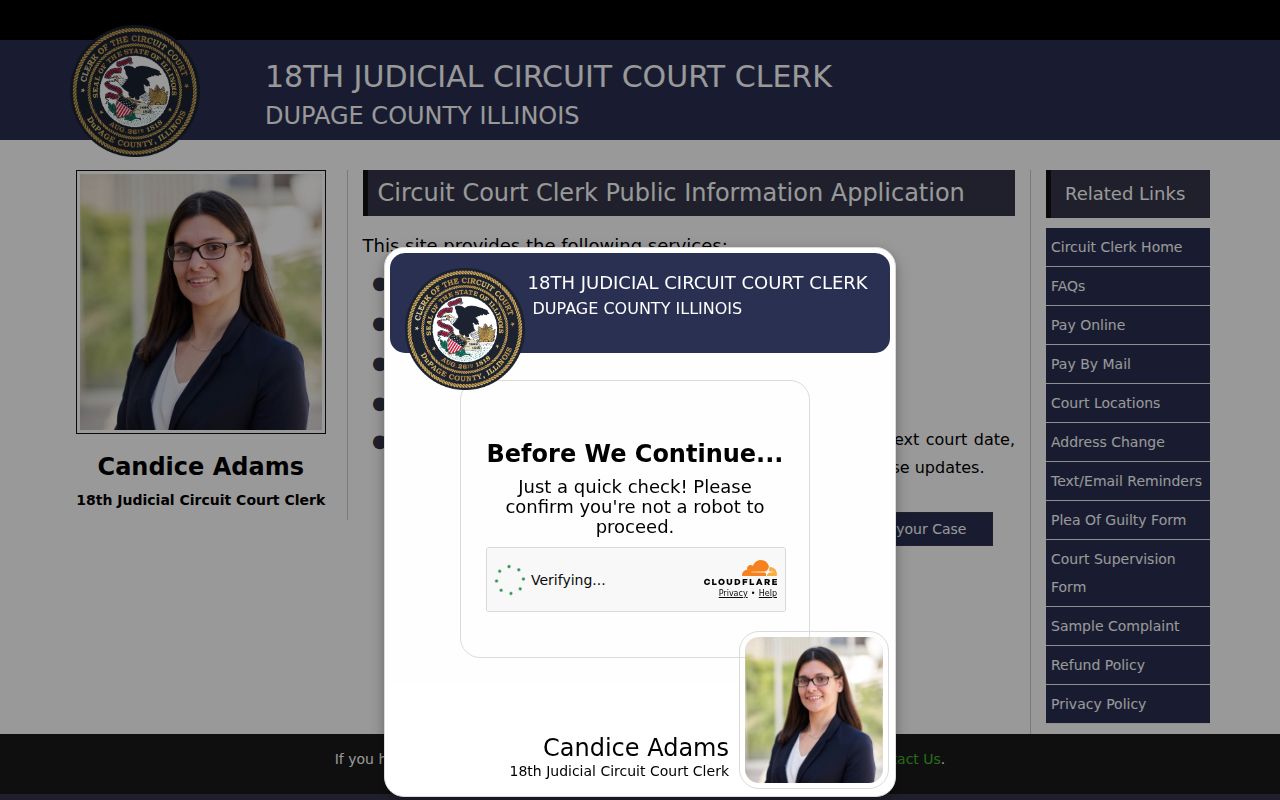
Read a result as a court index entry and obtain the actual public file when the distinction matters.
ZIP 60148 Is Not Lombard
ZIP 60148 is the confirmed USPS label associated with Lombard, but a postal label does not trace the Village boundary. The assessor can hold a property ZIP and a separate billing ZIP. GIS adds municipal, township, school, library, park, and fire boundaries. A legal description follows the parcel even when a postal city label changes.
This is a common directory myth. Treat the USPS result, parcel situs, billing address, and legal description as four location keys. Use address-level USPS confirmation for mail, the parcel card and GIS for land, and Village or county records for jurisdiction. Nearby ZIP labels in the same postal grouping still require an exact-address check.
Lombard Records Missing Online
The Village Clerk routes Lombard administrative, board, police, planning, permit, licensing, code, and related local records. GovQA is the online FOIA channel, while a printable form allows inspection, a copy, or a certified copy request. The requester must describe the record and state whether the purpose is commercial. Submitted requests become public records themselves.
The current form lists no charge for the first 50 letter-size pages, then 15 cents per page. Plats or maps are $3, certification is $1, and electronic media or an outside vendor can be charged at actual cost. Village Hall is at 255 E. Wilson Avenue, and Clerk staff can be reached at 630-620-5741. Police records, general records, and building inspection requests have separate routes, so send the request to the office that holds the file.
Historical Lombard Directory Shelves
A McDonough & Company Du Page County directory printed for 1924-25 contains a distinct Lombard section. The page is a period snapshot with residents, spouse or widow notation, occupations, employers, street addresses, telephone suffixes, officials, churches, schools, and lodges. It prints Lombard's population as 2,544. The modern census count is far larger, which is one reason the old volume must never be read as a current roll.
Helen Plum Library, at 411 S. Main Street, holds a Local History Collection, newspapers on microfilm, other directories and indexes, and licensed genealogy tools. Genealogy librarian David Gogo can help at 630-627-0316, extension 405. The Lombard Historical Society adds newspapers, photographs, oral histories, a cemetery book, and CatalogIt records. Its ordinary research request costs $20, usually takes three to six weeks, and on-site research uses an appointment.
The full shelf and entry notation are explained in the Lombard city directory collections. On the home page, the key point is date: an entry supports presence at a stated time, not uninterrupted residence.
138 Reels Expand Lombard Search
Helen Plum Library's November and December 2024 activity report records a second batch of 138 microfilm reels added to Advantage Archives. The batch includes Lombard Spectator issues from January 1995 through February 2012. The library also reported a partnership with the Lombard Historical Society to add digitized collection material.
Newspaper searching can connect a directory name to an obituary, school event, club notice, business, address, or family announcement. OCR is not exact. Search alternate spellings, initials, a spouse's name, and the street, then open the page image to verify what the print says. The Illinois Newspaper Project catalog uses open-ended forms such as 19uu and 9999; those marks are incomplete catalog notation, not verified start or end years.
The Helen Plum genealogy page introduces the local tools and access rules.
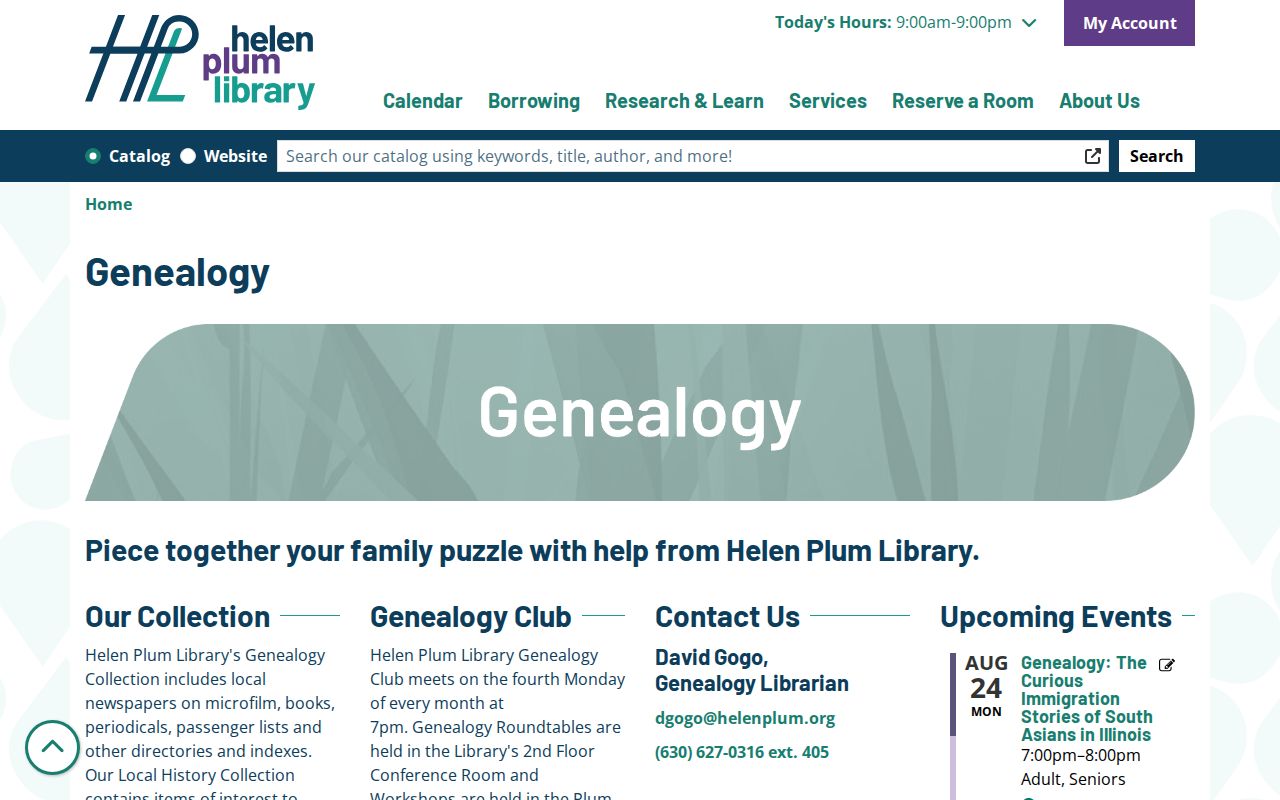
Library-only databases require the stated card or in-building access, while the public newspaper archive can be checked separately.
Lombard Family Search Safeguards
Some family searches use a protected official program rather than a public directory. Illinois IARMIE serves eligible adoption-connected people through an application, identification, a $15 fee in the stated cases, and mutual-consent rules for identifying information. A court-appointed Confidential Intermediary is a separate route. Neither process is an open name search, and eligibility matters.
For an heir, begin with public probate docket information, death and obituary clues, cemetery material, and Illinois I-CASH. I-CASH allows searches by name or business, first name, city, ZIP, or Property ID. It updates weekly and charges no search or claim fee, but a claimant must prove a relationship to the property and submit the required documents. A similar name does not establish a right to claim funds.
Lombard Archives Fill Portal Gaps
The Village Archive Center has visible fields for keyword, archive category, time period, start date, and end date. Its categories include daily police logs, accounts payable, newsletters, water reports, and Village Board minutes from before 1997. These are event and government records, not a household roll. They can still connect a name with an organization, address, public act, or dated meeting.
Lombard Cemetery supplies another historical endpoint. The burial ground dates to 1851, with land donated by Reuben and Anna Mink in 1864 and a layout associated with Josiah Lombard in 1870. Association changes followed in later decades. No official public interment-name search was found, so the practical chain runs through the Historical Society cemetery book, its research service, vital records, and an on-site inquiry. An absent web result is not an absent burial.
Official Lombard Rolls Compared
Official indexes are narrow but accountable. They identify the custodian, record purpose, field definitions, access limits, and a route to copies or corrections. Commercial people-finding tools may merge public and private data, but their dates and matching logic are often hard to test. They should never replace a deed, parcel card, court file, voter match, or archive image when a fact matters.
Official source: best for a filing, ownership event, case status, licensed role, or dated archive item. Confirm through the office and request the public record when needed.
Commercial category: may offer a broad lead, yet can merge same-name people, old addresses, and stale phone data. Do not treat a generated profile as a certified fact.
A solid Lombard residents directory search records where each detail came from, when it was current, and what it actually proves. This Lombard residents directory method prevents a mailing address from becoming an assumed residence or an old directory line from becoming a present-day claim.